Moisture-Proof FIBC Bags: Lamination vs. PE Liners
28/08/2026Moisture-Proof FIBC Bags: Lamination vs. PE Liners
When transporting or storing dry materials, exposure to environmental moisture, atmospheric humidity, or direct liquid water contact can lead to product spoilage, clumping, or contamination. Choosing the correct moisture-proof barrier for your FIBC (Flexible Intermediate Bulk Container) jumbo bags is essential to maintaining product quality throughout the global supply chain.
At Nghe An Packaging Joint Stock Company ( abbbreviated as NAPCO ), we manufacture custom moisture-proof FIBC bags engineered to protect hygroscopic and moisture-sensitive cargo across international freight routes.
1. When Does an FIBC Bag Need Moisture-Proofing?
Standard woven polypropylene (PP) fabric has microscopic gaps between the woven tapes, making it naturally porous. Moisture protection is required when your cargo involves:
-
Hygroscopic Materials: Products that naturally absorb moisture from the air, such as sugar, salt, urea, and dry fertilizers.
-
Fine Powders: Fine materials like flour, cocoa, starch, cement, or chemical powders that can seep through fabric weaves (sifting) or harden when exposed to ambient humidity.
-
Food & Pharmaceutical Products: Bulk ingredients requiring strict hygienic environments to prevent mold, bacteria growth, or contamination.
-
Extended Outdoor or Sea Transit: Goods subjected to maritime humidity, sea spray, or humid warehouse storage over prolonged periods.
2. Main Types of Moisture Protection: Lamination vs. PE Liner
To prevent moisture ingress and fine powder leakage, FIBC bags rely on two primary construction methods:
-
Lamination (Coated PP Fabric): A thin layer of liquid polypropylene/polyethylene film is extruded directly onto the woven PP fabric surface.
-
Polyethylene (PE) Liner: A separate plastic bag (liner) inserted inside the FIBC to create a completely liquid-tight and airtight barrier.
3. Fabric Lamination: Inside vs. Outside Coating
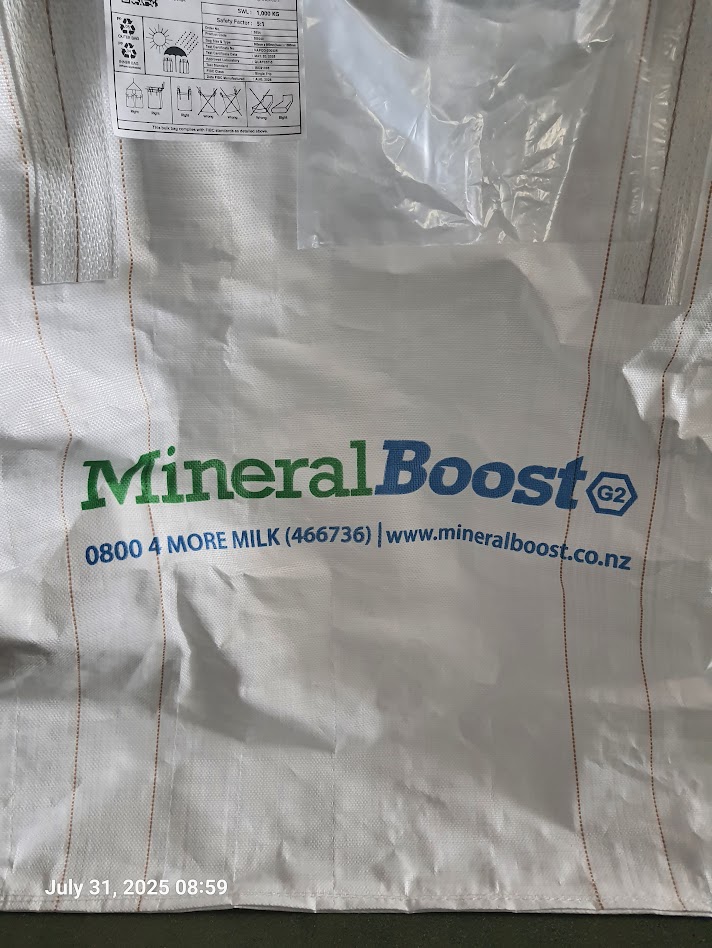
Extrusion coating can be applied to either side of the woven fabric, depending on your filling and discharge requirements:
-
Inside Lamination: The coating layer is applied to the inner surface of the bag. This prevents fine powder particles from trapping between the fabric weave, ensuring smooth discharge and zero product loss.
-
Outside Lamination: The coating is applied to the exterior fabric surface. This protects the outer structure against external water splashes, dirt, and atmospheric moisture while improving printing quality on the exterior bag wall.
4. PE Liner Types & Configurations
For maximum moisture barriers and zero-sifting protection, an internal PE liner is the industry gold standard. We offer several custom liner styles tailored to your operational setup:
-
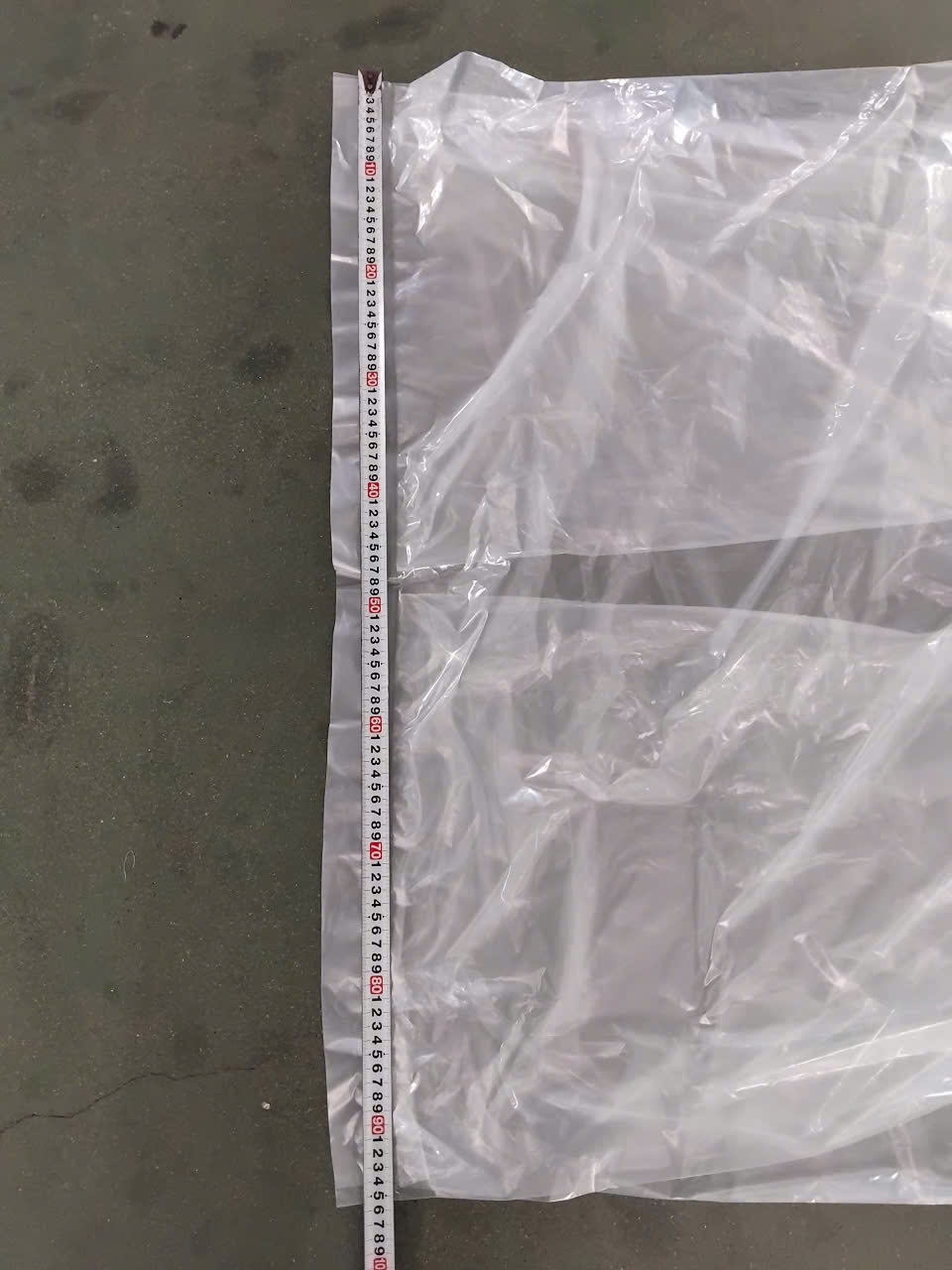
Tubular Liner: A simple cylindrical plastic sleeve sealed at the bottom. Cost-effective and widely used for general bulk storage.
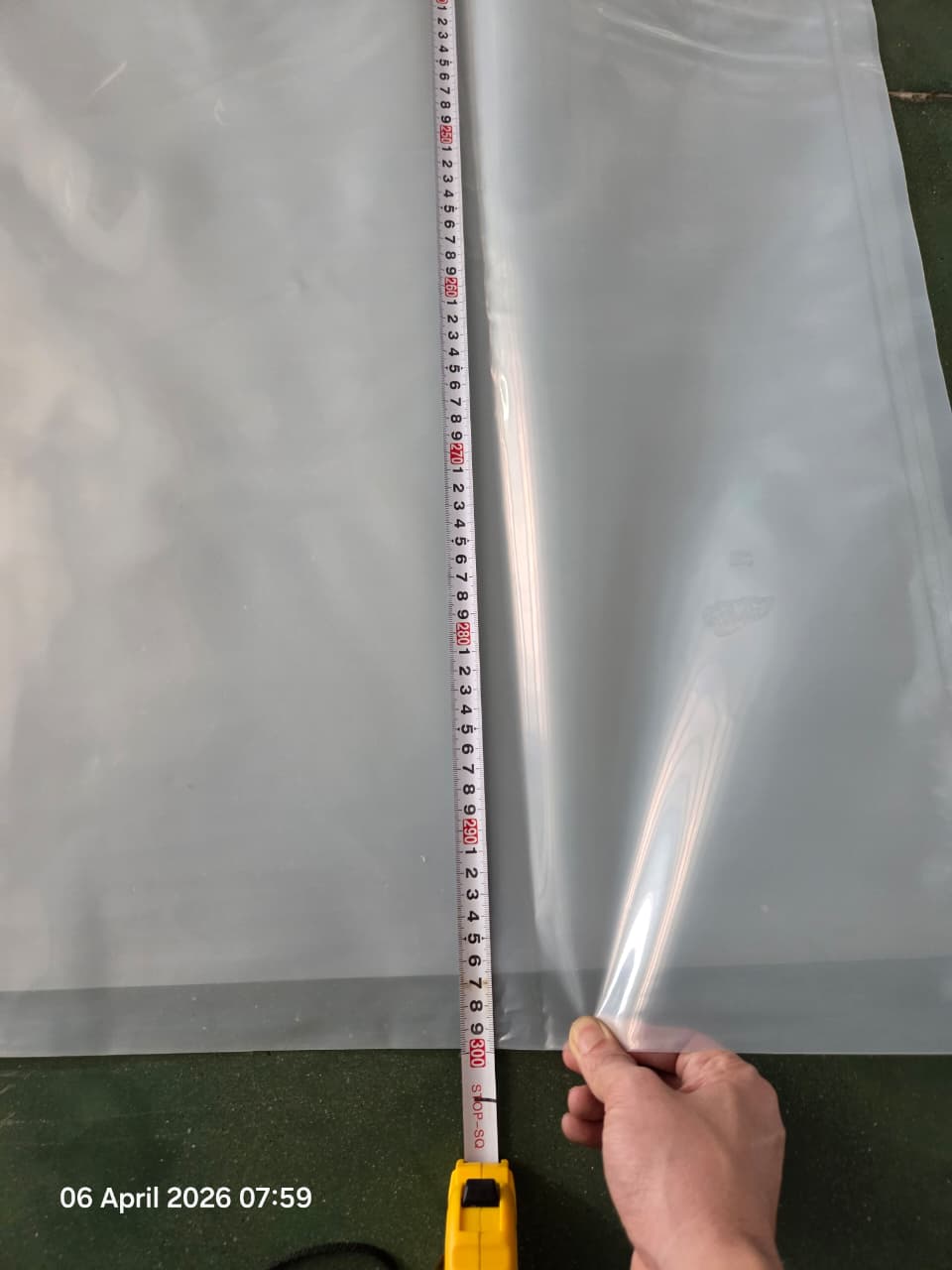
Tubular liner FIBC bag in Nghe An Packaging Joint Stock Company -
Gusseted Liner: Features side folds that expand into a square shape upon filling, conforming cleanly to the outer FIBC dimensions to maximize volume usage.
-
Tubular Liner with Pre-Blow: Pre-inflated during manufacturing so the liner expands fully inside the jumbo bag prior to filling. This eliminates trapped air pockets and prevents liner twisting.
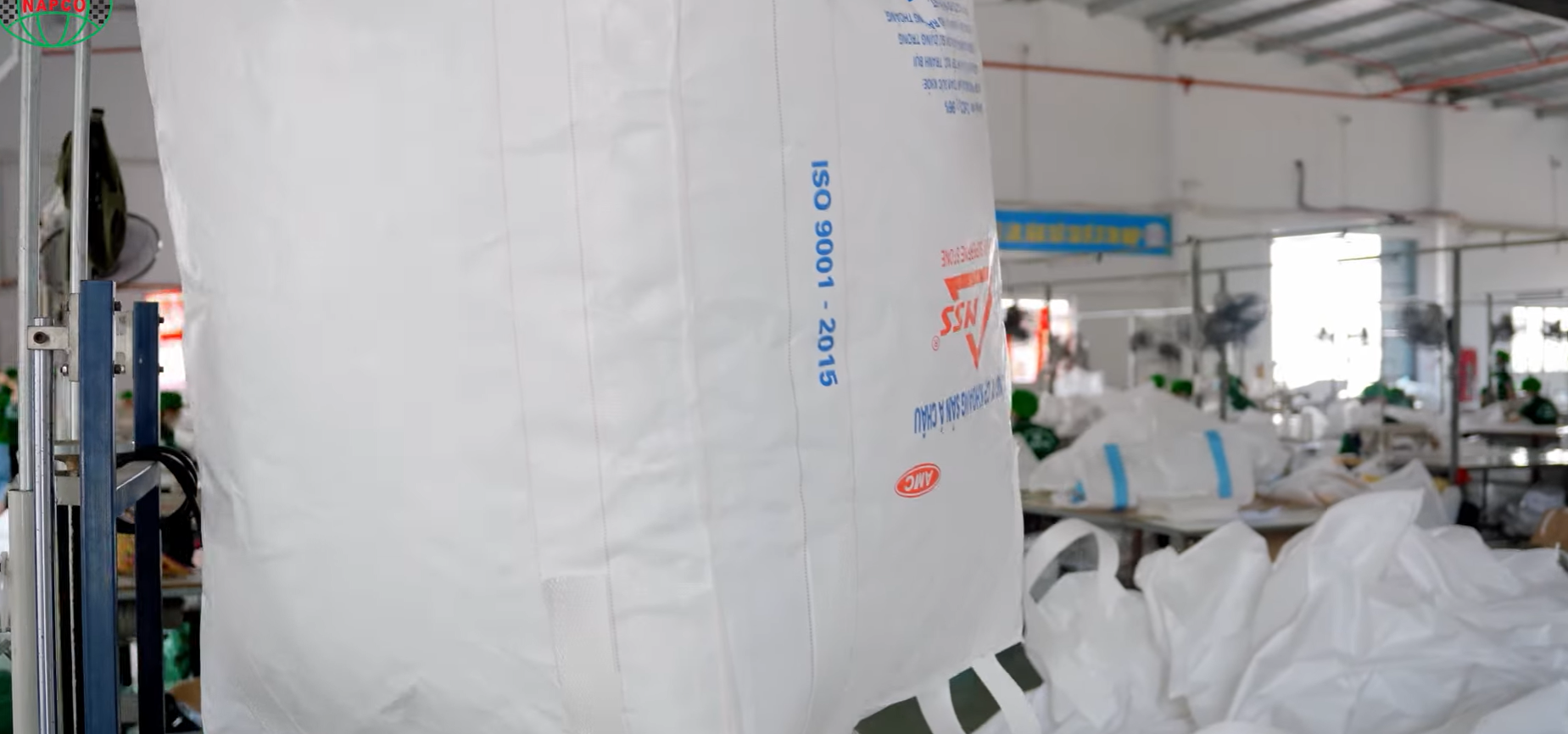
BLOWED liner FIBC bag in Nghe An Packaging Joint Stock Company -
Form-Fit Liner with Tabs: Custom-cut to match the exact geometry of the bag, including top spouts and bottom discharge spouts. Fitted with sewn/taped tabs attached to the outer bag seams to prevent the liner from pulling out during discharge.
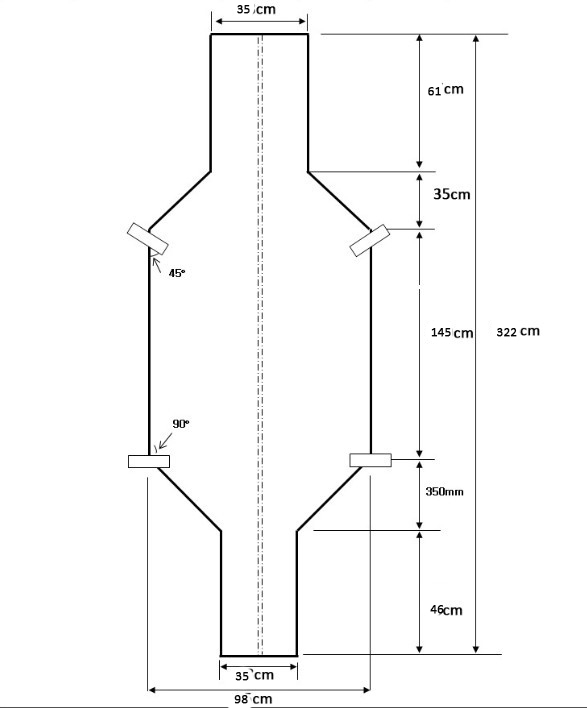
Form fit liner FIBC bag in Nghe An Packaging Joint Stock Company -
Form-Fit Liner with Glue: Shaped to the exact contour of the outer FIBC and permanently bonded to the inner walls using specialized hot-melt adhesive. This eliminates movement, making automated discharge fast and hassle-free.
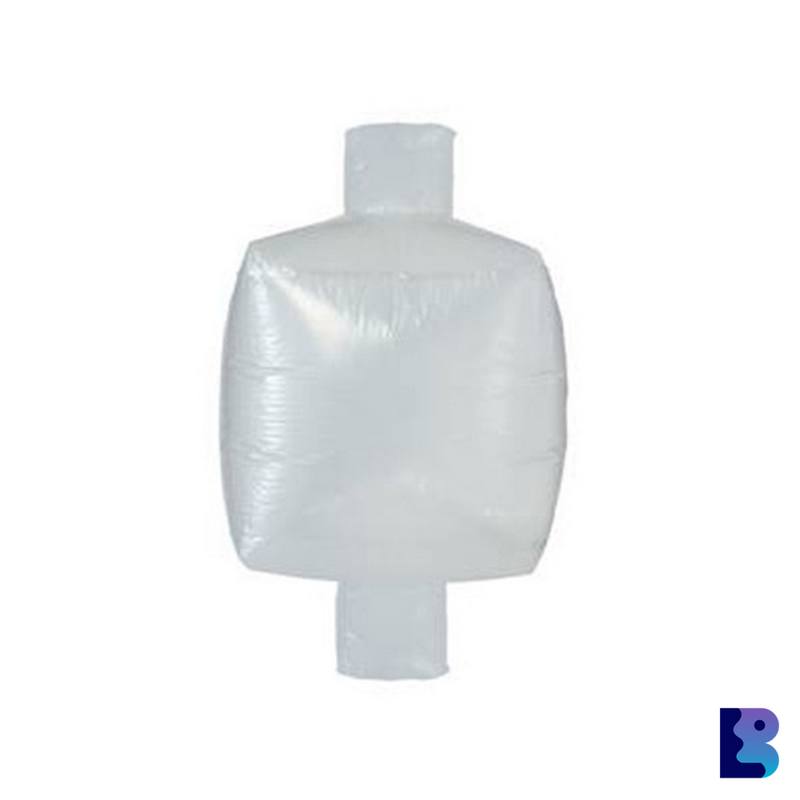
5. Temperature Resistance of PE Liners
Temperature management is critical when hot-filling materials like resins, bitumen, or warm chemicals into lined bulk bags.
-
Standard Low-Density Polyethylene (LDPE) Liners: Safe continuous operating temperature up to 70°C – 80°C (158°F – 176°F). Softening begins above 85°C.
-
High-Density Polyethylene (HDPE) Liners: Offers higher thermal stability, withstanding temperatures up to 90°C – 100°C (194°F – 212°F).
-
Specialized High-Temp Liners (Polypropylene / Polypropylene Blends): Engineered for hot-fill applications requiring resistance up to 110°C – 120°C (230°F – 248°F).
Important: Always allow hot-fill materials to cool down below the recommended safe threshold of the liner material to prevent melting, thinning, or seam failure.
Summary Comparison: Lamination vs. PE Liners
| Feature | Fabric Lamination | Internal PE Liner |
| Moisture Resistance | Moderate (Splash & Humidity Proof) | High (100% Airtight & Watertight) |
| Fine Powder Protection | Prevents minor sifting | Zero sifting / Zero leakage |
| Handling Convenience | Single-layer handling | Requires tab attachment or gluing |
| Hot Fill Temperature | Up to ~80°C | Up to ~110°C (with High-Temp PE/PP) |
| Best Application | Grains, animal feed, coarse chemicals | Food ingredients, fine powders, hygroscopic salts |
Order Custom Water-Proof FIBC Bags Direct from Vietnam
Whether you need inside-laminated fabric for fine powders or glued form-fit liners for automated discharge lines, Nghe An Packaging Joint Stock Company (NAPCO) custom builds moisture-proof FIBCs to meet your exact specifications.
Get a Instant Quote & Technical Support:
-
Contact Person: Mr. Dien – Export Manager
-
Hotline / Direct Support: +84 98 549 5345 (WhatsApp, WeChat, Line, Viber, KakaoTalk)
-
Email: Dien@napco.com.vn