PP woven bag manufacturing in India 2026
18/07/2026The industrial packaging landscape in 2026 is seeing rapid growth, with the global PP woven bag market projected to exceed $5.6 billion. India has traditionally been a dominant force in this growth, driving major supply chains for WPP bags, poly woven bags, and general PP bags. Backed by massive agricultural and construction sectors, Indian production facilities push high volumes of polypropylene woven bags out to the world.
For international procurement teams evaluating global sourcing contracts, here is a comprehensive breakdown of the Indian manufacturing ecosystem and how it stacks up against regional alternatives like Vietnam.
The State of India’s PP Woven Bag Manufacturing Ecosystem
India’s production capacity for woven poly bags is vast, concentrated primarily in major industrial clusters across states like Gujarat, Madhya Pradesh, and Tamil Nadu.
1. Massive Domestic Feedstock and Agricultural Base
India produces over 312 million metric tons of cereals annually, creating a massive, built-in domestic demand for polypropylene sacks to support storage and food security initiatives. This scaling allows Indian manufacturers to process large volumes of polypropylene resin, creating a stable backbone for heavy-duty industrial supply chains.
2. Specialized Packaging Typologies
Indian producers excel at a wide range of standard formulations, utilizing highly specialized designs for key industrial lines:
-
Laminated PP Bags: Accounting for the largest growth margins, laminated varieties dominate the regional fertilizer and agrochemical sectors due to their moisture resistance.
-
Valve Bags & Block Bottom Sacks: Popularized by the country’s massive infrastructure push, Indian factories produce high volumes of specialized valve packaging tailored for high-speed automated cement filling.
-
BOPP Printed Sacks: Designed specifically for premium, retail-ready consumer branding in the grain and pet food sectors.
Technical Specifications Matrix (India Export Standard)
| Feature | Standard Specifications Range | Typical Industrial Application |
| Material Base | 100% Virgin PP / Recycled (rPP) Blends | Bulk Commodity & Retail Distribution |
| Fabric Weight | 50 GSM to 140+ GSM | Grains, Sand, Powders, and Heavy Cement |
| Weave Mesh | 9×9 to 14×14 Tapes per Inch | Leak prevention and structural stiffness |
| Special Treat | UV Stabilized (Up to 1200+ Hours) | Outdoor farm storage and extended transit |
The Emerging Challenge: Shift to Vietnam’s Advanced Supply Chain
While India offers scale, procurement managers balancing logistics risk, tariffs, and tech efficiency are increasingly turning toward a diversified strategy, looking to neighboring Vietnam as a premium alternative.
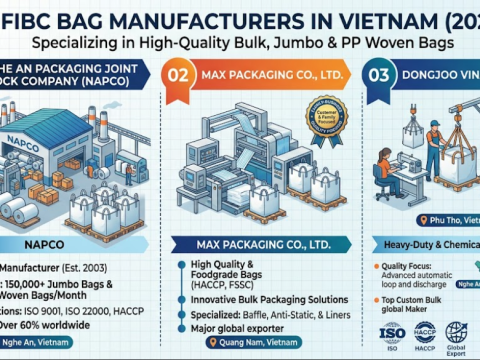
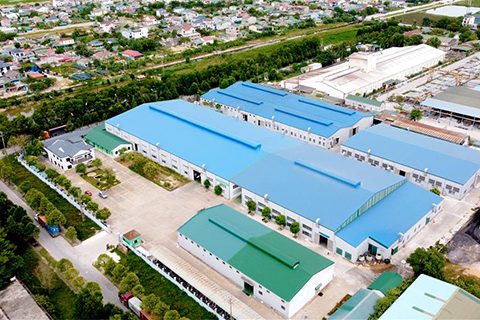
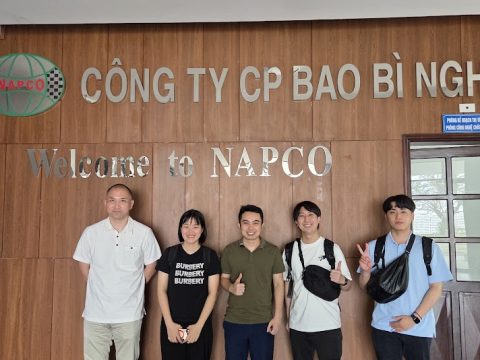
Factories like NAPCO (Nghe An Packaging Joint Stock Company)—operating through the global portal vietnamjumbobag.com—provide powerful advantages that challenge traditional sourcing choices:
1. High-Precision Automation (Starlinger & Lohia Technology)
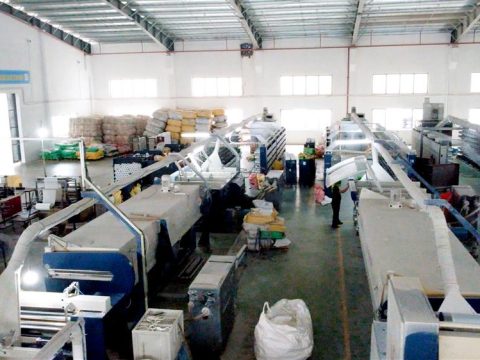
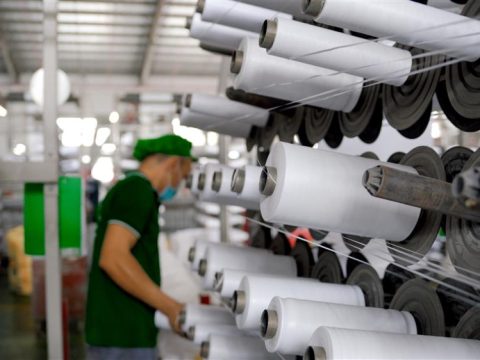
Vietnam’s packaging sector has automated at a faster regional rate, deploying top-tier Starlinger (Austria) and Lohia (India) circular weaving lines. This deployment of automated cutting, weaving, and digital lamination drastically minimizes manual labor errors, resulting in uniform fabric quality (GSM) and clean seal registration across massive multi-container orders.
2. The Global Free Trade Agreement (FTA) Network
Vietnam’s proactive trade policy offers an edge in tariff mitigation. With 17+ active Free Trade Agreements—including the EVFTA (Europe), UKVFTA (United Kingdom), and CPTPP (Americas/Oceania)—global buyers can import Vietnamese poly polypropylene bags at 0% or deeply discounted duties, bypassing extra reciprocal taxes.
3. Strategic Deep-Sea Port Logistics
Logistics speed dictates supply chain survival. Vietnam’s factories leverage proximity to deep-water ports like Lach Huyen Port in Hai Phong. This enables direct container routing to major international hubs in the US, Europe, and Australia, cutting out transshipment delays in secondary ports and trimming transit times by days.
4. Strict International Compliance
Top Vietnamese producers operate under global quality management frameworks, carrying ISO 9001:2015, ISO 22000:2018, and HACCP certifications. This ensures that every container of food-grade PP sacks complies with strict consumer safety standards.
Secure a High-Performance Sourcing Solution
Whether evaluating regional leaders or securing an automated supply chain, sourcing your industrial materials requires structural precision and reliable export logistics. Moving volume through an agile, tariff-exempt partner ensures your operational margins remain completely protected against market shocks.
Explore specialized technical spec sheets, view factory-floor production timelines, and request a factory-direct container quote optimized for your specific port requirements.
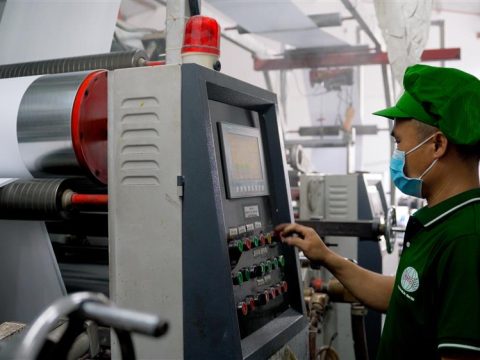
For a closer look at the advanced machinery powering this regional industry, check out India’s Advanced PP Woven Cement Valve Bag Making Technology, which highlights the high-speed automated bag conversion systems utilized in the modern production landscape.
Visit vietnamjumbobag.com today to browse our full 2026 catalog, download technical data sheets, and request a factory-direct container quote to your nearest Australian port.
- Dien – Export Manager: +84 98 549 5345 (Whatsapp, Wechat, Line, Viber, Kakao talk)
- Email: Dien@napco.com.vn
- Website: https://vietnamjumbobag.com/